 On October 25 my life as I knew it changed forever. Only at first, I vehemently denied it.
That afternoon, around 5pm, walking with my wife in the crisp fall air, my chest tightened as in a vise grip, I bent over, and breathing heavily, with sudden shocking fatigue her I couldn’t continue. I almost collapsed on the spot, but she helped me back into the house and sat me on our couch.
Looking at me with concern, she announced we would go to the Emergency Room. Like any good male, I resisted her thoroughly rational pronouncement. It couldn’t be a heart attack, I thought, and it’d be embarrassing to go to the ER only to be sent home. As I doubled over, clutching my chest, I relented and got in the car. I certainly thought I’d be back that evening. Instead, I wouldn’t return home for ten days.
Initially, as I expected, one test after another showed nothing wrong with my heart or lungs. But then the doctor did one final test, a CT scan of my lungs, to rule out a blood clot. When he came to tell us the results, he started ominously. “The good news is there’s nothing wrong with your lungs. But we see something on your heart, and we recommend you stay the night so we can check it out.” My wife nodded yes, so I sighed, shrugged, and relented.
The next morning a doctor delivered the verdict. I had an aneurysm in one of my heart arteries. The following day, the doctor who performed the angiogram – a procedure where a small camera is inserted into your heart – leaned in after finishing and simply said: “It’s large, very, very large.” He seemed shaken. The doctor who performed the next procedure clarified that the artery was “aneuyristic”, followed with “I’ve never seen anything like it.”
That became the refrain: “I’ve never seen anything like it,” sometimes proceed by “Wow”. Another called me “special,” only not a special you’d want. Gradually I descended into despair and fear, as did family and friends. My wife and oldest daughter, who happened to be visiting, hovered and interrogated confused doctors. My pastor arrived to give me the Sacrament of the Sick, otherwise known as “Last Rites,” if given before you die, which now seemed a real possibility, given that no one knew how to fix the problem and my chest continued to tighten uncomfortably.
As I lay in bed on the third night in the hospital with death seemingly close at hand, I swore I wouldn’t be one of those people who said the moment changed their life. I wouldn’t chart a new course or find new meaning. I’d lived the life I wanted. Yet another two nights on, I awoke from a nightmare and knew I’d been changed, much of what I thought mattered didn’t, that I needed to reconsider everything. That’s if I had the time.
The turning point came in dreams. In the first, I saw my children grieving me, their pain and tears, and awoke crying, repeating “no, no, no”. It seemed the worst thing I could ever put them through. Suddenly seeing them was all I longed for. On death’s doorstep family, and then friends, were all that mattered. Not sales or profit. The next night I dreamt God came to take me. I argued with Him. I had unfinished work to do in the business and the family trust. Pensively he shook His head. The arguments were losers. If I lived, I’d have live differently.
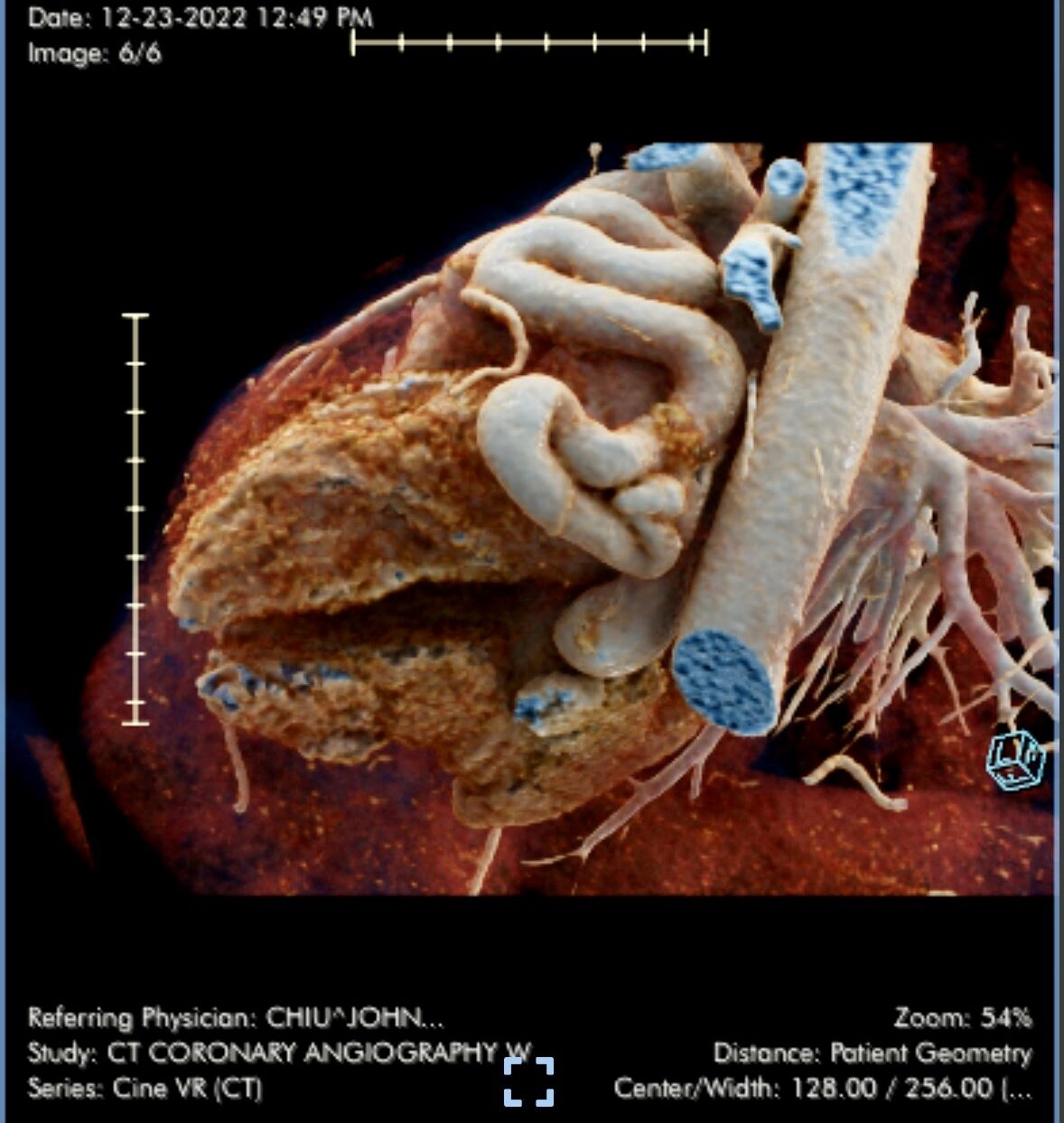
Eventually, my local Oakland hospital kicked me over to University of California San Francisco (UCSF) hospital across the Bay. Worried doctors buzzed around me, which provided no reassurance. They did clarify that my left circumflex artery, one of three arteries in the heart, was very dilated. It measured 17 millimeters across, about eight times larger than it should be. It snaked around my heart, dumping blood into a 1mm vein that couldn’t handle the flow. I had, in clinical terms, a “fistula.” Only about .0002% of the population has one.
As I lay in my uncomfortable hospital bed in a small room at UCSF, death was more tangible than it had ever been. Rounds of cardiologists talked about a rare and risky surgery where the artery was bypassed and then closed. Or perhaps a simpler procedure where the connection to the vein was sealed. Or maybe a heart transplant. Or maybe do nothing and see if things grew worse. Maybe do nothing and treat the symptoms with medication. The surfeit of suggestions spun my head. Nothing seemed clear.
Around the tenth day, my doctors settled on the least invasive procedure but told me to go get second opinions. My heart was healthy enough to take the time, which came as a pleasant surprise. One pointed me to the Mayo Clinic, which has one of the best adult congenital cardiology departments in the country. Long story short, Mayo said the procedure contemplated would cause blood clots and very likely kill me. Surgery was very dangerous and a last resort. Watch and wait and recondition my body by working out, doctors said quite persuasively over three hours of meetings, emphasizing the positive. They asked that I come back in nine months to see how my heart was doing.
As we drove back to Minneapolis from Mayo, I sobbed out of relief. I’d live with a compromised heart but had a shot at a long life. My second chance had arrived.
I began by asking my children to come home and celebrate Thanksgiving early, fulfilling the ache that arose in that terrifying dream. I committed to reaching out to friends. I’d too often failed to, diverted by other daily demands. I accepted the business needed me less given the stellar management team I had in place. I resolved to write more, a long passion, and committed to gratitude and hope, not my tendency to worry over the worst case. I started working out for the first time in years, which has improved my energy. With whatever time I might have, I began considering what I might do for my community, other than serving on school boards.
As I looked around the table at my family on that Thanksgiving night, I offered thanks for them and this chance to live anew. Despite death lingering on the periphery, with a flawed heart beating in my chest, I thanked God for my blessings and the richness of my life. In fact, it seemed I felt gratitude for the first time in my 64 years. I knew I was at the beginning of a new journey, and had a long way to go, but I had begun.
Confronting death had done to me what I swore it wouldn’t. It changed me. Turns out the cliché is true. Which is why, I now realize, it’s a cliché.